What Are Commercial Garage Doors?
Commercial garage doors are engineered entry systems for warehouses, loading bays, workshops, service centers, and other business facilities. They differ from residential doors through their size, operating cycles, security needs, and construction. A busy distribution center may open its door dozens of times daily, while a small repair shop may need fewer cycles but stronger impact resistance.
Common designs include sectional steel doors, rolling service doors, high-speed fabric doors, fire-rated doors, and glass or aluminum systems. Each option serves a different purpose. Insulated panels can help control indoor temperatures. Vision panels can improve visibility near busy work areas. Heavy-duty tracks, springs, operators, and safety sensors must match the door’s weight and frequency of use. A poor match creates noise, delays, and avoidable wear.
The right choice begins with the building, not the catalog. Facility managers should examine opening dimensions, traffic patterns, weather exposure, ceiling clearance, security requirements, and maintenance access. Professional installers typically check alignment, hardware condition, emergency release functions, and sensor response before handover. Small details matter. A damaged seal may admit rain under the door. A weak hinge can produce uneven movement and costly repairs.
The term “commercial garage doors” sounds straightforward, but selecting one is rarely simple. Product labels can be confusing, and impressive specifications may not fit real working conditions. That deserves honest review. A reliable door should operate smoothly, protect people and property, and remain serviceable over time. This guide explains the main types, materials, mechanisms, safety features, and selection factors businesses should understand before investing.
Commercial Garage Doors Defined: Functions, Applications, and Industry Scope
What Are Commercial Garage Doors?
Commercial Garage Doors Defined: Functions, Applications, and Industry Scope
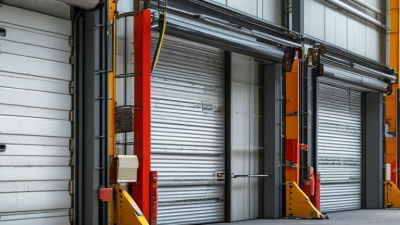
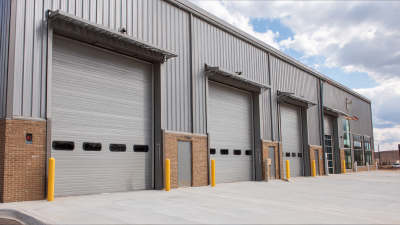
Commercial garage doors are engineered access systems for business, industrial, agricultural, and public-service buildings. They differ from residential doors in scale, duty cycle, security needs, and maintenance expectations. A warehouse may use a sectional door for loading, while a fire station may need rapid, reliable opening. Some facilities choose rolling steel doors where compact storage and impact resistance matter.
Their functions extend beyond entry and exit. They help control temperature, dust, noise, light, and unauthorized access. Insulated panels can reduce heat transfer around climate-controlled workspaces. Vision panels improve awareness, but they may weaken privacy or security if poorly specified. Operators, tracks, springs, sensors, and seals must work as one system.
That sounds simple. It is not.
Applications include distribution centers, repair shops, retail buildings, parking structures, and manufacturing plants. Industry scope covers design, structural preparation, installation, inspection, repair, and planned replacement. A qualified assessment considers opening size, traffic frequency, wind exposure, fire requirements, and available headroom.
Site measurements matter more than assumptions. A door may fit the opening yet fail operationally when vehicles approach at awkward angles. The boundary between commercial and heavy-duty residential use can also blur. Specifications should reflect actual traffic, not hopeful estimates.
Field experience often shows that choosing a low purchase price can create avoidable downtime and difficult service access later.
Main Types: Sectional, Rolling Steel, High-Speed, and Fire-Rated Doors
What Are Commercial Garage Doors?
Main Types: Sectional, Rolling Steel, High-Speed, and Fire-Rated Doors
Commercial garage doors protect loading bays, workshops, warehouses, and service areas. Their design affects traffic flow, security, insulation, and maintenance. The U.S. Energy Information Administration’s 2018 Commercial Buildings Energy Consumption Survey counted 5.9 million commercial buildings nationwide. That scale makes door selection an operational decision, not a minor construction detail.
Sectional doors use horizontal panels that travel along ceiling tracks. They suit distribution centers needing insulation and controlled indoor temperatures.
Rolling steel doors coil above the opening, saving overhead space and resisting frequent impacts.
High-speed doors open and close rapidly, reducing drafts, dust, and waiting time at busy docks. They are useful, but their moving parts need disciplined inspection.
Fire-rated doors serve a different purpose. They limit fire and smoke movement, and NFPA 80 requires inspection and testing at least annually. Ratings must match the wall assembly and opening conditions.
DASMA technical guidance stresses that door performance depends on proper installation, balanced hardware, and regular maintenance. A larger door is not automatically stronger. A faster door is not always better. Site temperature, vehicle traffic, wind exposure, and available headroom can change the decision. I have seen specifications focus on panel thickness while ignoring track alignment. That mistake becomes noisy, expensive, and surprisingly hard to correct.
Construction Materials and Performance Standards Under ANSI/DASMA Guidelines
What Are Commercial Garage Doors?
Commercial garage doors are engineered entry systems for warehouses, service bays, loading areas, and public facilities. Their construction commonly includes galvanized steel, aluminum, insulated panels, or vision sections with durable glazing. Material selection affects weight, corrosion resistance, insulation, and repair needs.
Under ANSI/DASMA guidelines, performance matters as much as appearance. A door should match its intended use, opening size, operating speed, and duty cycle. Wind-load design is especially important in exposed locations. The supporting wall, tracks, anchors, and hardware must work as one system. A strong panel cannot compensate for weak fastening.
Safety devices require careful attention.
Photo eyes, sensing edges, emergency release systems, and warning labels help reduce operational risks. ANSI/DASMA documents provide recognized technical guidance, but local building codes may impose additional requirements. Testing records and installation instructions should be reviewed before approval. Field conditions can differ from drawings. That detail is easy to overlook.
Insulated doors can improve temperature control in conditioned spaces. However, insulation alone does not guarantee low energy use. Seals, alignment, and frequent opening cycles also influence performance. A heavier door is not automatically safer or better. The correct choice depends on verified loads, usage patterns, maintenance access, and the building’s actual exposure. Even experienced teams should recheck these assumptions during installation.
What Are Commercial Garage Doors?
Construction materials influence the weight, thermal behavior, corrosion resistance, and operating requirements of commercial garage doors. The chart compares representative engineering properties of materials commonly used in door panels, frames, and glazing systems.
How to read this chart: Density is shown in kilograms per cubic meter, while thermal conductivity is shown in watts per meter-kelvin. Values are typical reference values and vary with alloy, moisture content, composite formulation, coatings, and panel design. ANSI/DASMA guidance evaluates the complete door system through applicable performance criteria such as wind-load design, operational durability, air infiltration, and water penetration; material selection alone does not determine a door’s final rating.
Cycle Ratings of 10,000–100,000: Durability, Maintenance, and Service Life
Commercial garage doors serve warehouses, workshops, loading areas, and service facilities where frequent operation is expected. Unlike residential doors, they use heavier panels, stronger hardware, and commercial-grade springs. Their cycle rating usually ranges from 10,000 to 100,000 cycles. One cycle means one complete opening and closing.
A 10,000-cycle door may suit a small facility with limited daily traffic. A 100,000-cycle system better fits busy loading bays, where doors operate dozens of times daily. However, the rating is not a guaranteed service-life promise. Dust, humidity, impact damage, poor alignment, and incorrect spring tension can shorten performance. In field inspections, I often find that worn rollers create more strain than owners expect. Small problems become expensive quickly. Even experienced maintenance teams sometimes overlook loose fasteners and damaged seals.
Tips: Record daily door activity and compare it with the rated cycles. Inspect springs, cables, rollers, tracks, hinges, and safety sensors regularly. Keep tracks clean, but do not apply random lubricants. Use products approved for the door hardware. Arrange professional service when the door shakes, drags, closes unevenly, or makes sudden noises. A maintenance log can reveal gradual changes before failure occurs. It is also wise to review the door’s cycle rating when business traffic increases. A door that once seemed oversized may become under-rated after a second shift begins.
What Are Commercial Garage Doors? - Cycle Ratings of 10,000–100,000: Durability, Maintenance, and Service Life
Commercial garage door cycle ratings indicate the approximate number of complete open-and-close operations a door system is designed to withstand under stated operating conditions. Actual service life depends on usage frequency, door weight, climate, installation quality, maintenance, and component condition.
| Rated Cycles |
Typical Commercial Duty |
Illustrative Use Level |
Estimated Service Life at 20 Cycles/Day |
Recommended Maintenance |
Common Durability Considerations |
| 10,000 cycles |
Light commercial |
Approximately 5,200 cycles per year |
About 1.9 years before the rated cycle count is reached |
Inspect hardware, tracks, rollers, cables, and safety devices at least twice a year; lubricate moving metal parts as specified. |
Suitable for lower-traffic facilities. Frequent stopping, impact, corrosion, or poor balance can shorten component life. |
| 25,000 cycles |
Moderate commercial |
Approximately 5,200 cycles per year |
About 4.8 years before the rated cycle count is reached |
Perform quarterly visual inspections and arrange a professional balance, spring, cable, and operator check annually. |
A practical range for offices, small warehouses, service areas, and facilities with regular but not continuous traffic. |
| 50,000 cycles |
Heavy commercial |
Approximately 5,200 cycles per year |
About 9.6 years before the rated cycle count is reached |
Schedule professional preventive maintenance at least annually, with more frequent inspections in high-use or harsh environments. |
Designed for demanding daily operation when the door is properly sized, balanced, installed, and protected from vehicle impact. |
| 75,000 cycles |
Very heavy commercial |
Approximately 5,200 cycles per year |
About 14.4 years before the rated cycle count is reached |
Use a documented preventive-maintenance program with periodic checks of springs, bearings, hinges, rollers, cables, seals, and controls. |
Appropriate for busy distribution, industrial, fleet, and service facilities where downtime has a significant operational cost. |
| 100,000 cycles |
Extreme-duty commercial or industrial |
Approximately 5,200 cycles per year |
About 19.2 years before the rated cycle count is reached |
Maintain a formal service schedule, inspect high-wear parts regularly, and promptly replace damaged or fatigued components. |
Best suited to high-frequency operations. A high cycle rating does not eliminate wear from impact, corrosion, contamination, or incorrect operation. |
Important calculation note:
The service-life estimates assume 20 complete cycles per operating day and 260 operating days per year. One cycle equals one opening and one closing. These figures are planning estimates, not guarantees; springs, rollers, cables, bearings, operators, panels, and safety devices may require service or replacement before the complete door system reaches its rated cycle count.
Safety Requirements: UL 325 Operators, Photoeyes, and NFPA 80 Fire Doors
Commercial garage doors protect loading bays, service areas, warehouses, and parking facilities. They handle heavier cycles than residential doors. Their safety design requires more than a strong panel and motor. Installation experience matters because door weight, closing speed, traffic, and floor conditions can change daily.
Operators should meet UL 325 safety requirements for monitored entrapment protection. Photoeyes create an invisible beam across the opening. If a person, pallet, or vehicle breaks that beam, the door should stop or reverse. Technicians must check sensor height, alignment, wiring, and response time. Small alignment errors matter. A clean-looking installation can still fail testing. Staff should test the system regularly, not only after a service call.
Fire-rated commercial doors follow NFPA 80 requirements for installation, inspection, testing, and maintenance. These doors must close reliably when released, limiting fire and smoke movement between areas. NFPA’s Fire Loss in the United States During 2022 report recorded about 1.5 million fires and 3,790 civilian fire deaths. That figure does not measure garage-door failures, but it shows why passive protection deserves attention. NFPA 80 calls for periodic inspection by a qualified person, with documented results. Dust, impact damage, blocked guides, and modified wiring can undermine performance. Real buildings are imperfect. Safety programs must account for that.