Choosing reliable suppliers from China’s large garage door market requires more than comparing product photos. This guide introduces ten notable companies associated with modern garage doors, residential projects, and commercial applications. Their product ranges may include sectional doors, full-view aluminum doors, insulated steel panels, and smart opening systems.
Practical details matter. A coastal homeowner may need corrosion-resistant hardware, while a warehouse manager may prioritize cycle life and rapid operation. Insulation values, panel thickness, sealing systems, spring quality, and motor compatibility can affect daily performance. Installation guidance matters too. A beautiful door can still disappoint when measurements, tracks, or safety sensors are handled poorly.
The evaluation considers manufacturing experience, customization capacity, quality control, export support, and customer feedback. It also looks at documentation, including technical drawings, warranty terms, testing records, and available certifications. These details help buyers compare suppliers with greater confidence, rather than trusting polished catalog images alone.
No supplier fits every project. That is worth remembering. One company may offer strong prices but limited after-sales support. Another may provide excellent engineering but require higher minimum orders. Supplier claims should be verified through samples, factory communication, and written specifications. Even experienced buyers can overlook small details, especially delivery responsibilities and replacement-part availability.
This overview is intended as a practical starting point. It does not replace technical assessment or local installation advice. Readers can use the comparison to identify suitable manufacturers, prepare better questions, and select a partner that matches their building, budget, and long-term maintenance needs.
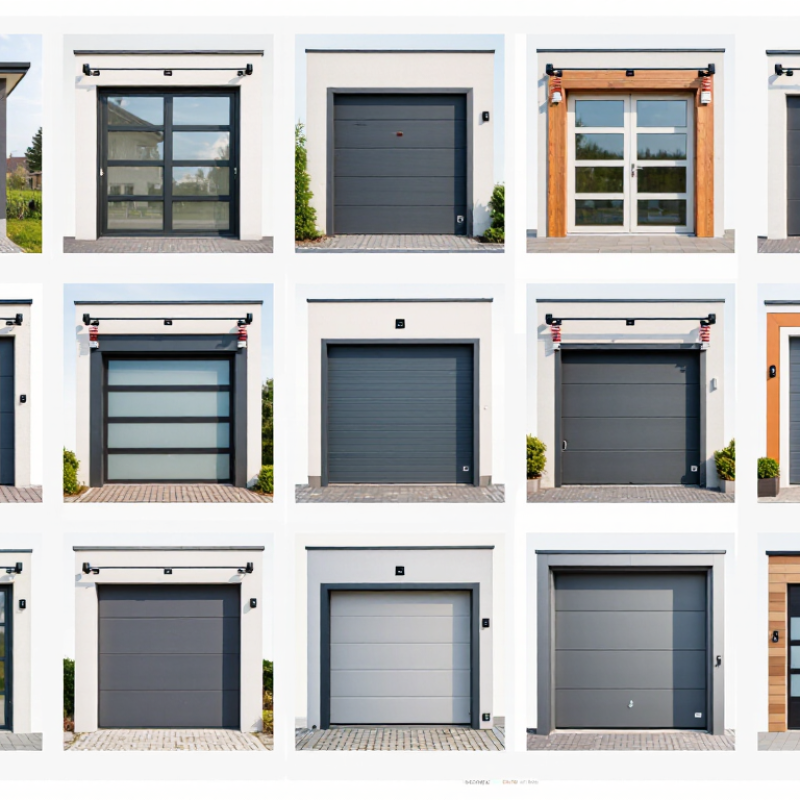
China Top 10 Modern Garage Door Suppliers
Modern garage door suppliers in China cover more than factory production. They may design sectional, rolling, glass, insulated, or customized doors for homes and commercial buildings. Their scope often includes steel, aluminum, glass, sealing systems, motors, remote controls, and smart access devices. Reliable suppliers should explain material grades, opening cycles, insulation values, safety features, and installation requirements clearly.
From practical sourcing experience, the strongest suppliers provide drawings, samples, load details, and consistent quality inspections. They should support private-label projects, technical adjustments, export packaging, and after-sales communication. A supplier’s real capability appears in small details, such as protected corners, accurate panel alignment, and clear wiring instructions. Ten suppliers may look similar online. They rarely perform equally in production control or service response.
Tips: Request a factory audit, not only product photos. Compare test reports, warranty terms, lead times, and replacement procedures. Ask whether the quoted motor fits your local voltage and climate. Confirm wind resistance and insulation data in writing. Cheap doors can become expensive after installation. I still question catalogue claims without independent evidence. That caution is healthy. Suppliers should welcome technical questions rather than avoid them.
Evaluation dimensions used to define a modern garage door supplier, excluding individual company and brand data.
The index reflects the relative importance of each dimension when assessing suppliers in China’s modern garage door sector. Product engineering, safety compliance, smart-control integration, customization, and after-sales capability are core elements of the supplier scope.
Choosing among China’s top ten modern garage door suppliers requires more than comparing catalog photos. Start with factory evidence: production facilities, equipment, quality records, and recent project references. Ask to see a working door under load, not only a showroom sample. A reliable manufacturer should explain panel structure, insulation values, spring cycles, motor duty ratings, and corrosion protection clearly. Details matter.
Request drawings with dimensions, wind-load assumptions, opening tolerances, and electrical requirements. Verify testing reports through traceable laboratories and match them to the exact model. Confirm whether certificates cover the complete door system or only one component. Check welding, seals, tracks, hinges, and safety sensors during a factory visit or live video inspection. I have found that small gaps around the bottom seal often reveal more than attractive brochures. The sample may look perfect. Production consistency is harder.
Evaluate communication after receiving the quotation. Can the supplier answer technical questions without changing specifications? Request a written inspection plan, spare-parts list, packaging photos, warranty scope, and response times. Review installation training and after-sales support in your destination market. A low price can become expensive when replacement panels arrive slowly. I would also order one pilot unit before a large purchase. It may delay the project. That delay can expose unclear tolerances, noisy operation, or weak documentation early. Even experienced buyers miss details when deadlines feel urgent.
A practical, brand-neutral evaluation framework for comparing Chinese garage door manufacturers
| No. | Evaluation Dimension | What to Evaluate | Recommended Verification Evidence | Suggested Weight |
|---|---|---|---|---|
| 1 | Product Engineering Capability | Ability to design sectional, roller, side-hinged, full-view, and insulated garage door systems for different building applications. | Technical drawings, load calculations, product specifications, prototype records, and documented design-change procedures. | 15% |
| 2 | Safety and Compliance | Protection against crushing, falling doors, uncontrolled movement, pinch points, and unsafe automatic operation. | Applicable test reports and declarations for the destination market, including relevant requirements such as EN 13241, EN 12453, UL 325, or local regulations. | 15% |
| 3 | Material and Component Quality | Steel or aluminum grade, panel thickness, insulation core, seals, hinges, rollers, springs, tracks, motors, and control systems. | Material certificates, incoming inspection records, approved component lists, and traceability records for critical parts. | 12% |
| 4 | Thermal and Acoustic Performance | Insulation performance, air leakage, weather resistance, and noise generated during opening and closing. | Declared U-value or R-value, panel construction data, sealing details, laboratory reports, and application-specific performance tests. | 10% |
| 5 | Wind Resistance and Durability | Resistance to wind pressure, repeated operation, corrosion, ultraviolet exposure, moisture, and temperature changes. | Wind-load calculations based on the project location, cycle-test results, corrosion test data, and maintenance requirements. | 12% |
| 6 | Manufacturing and Quality Control | Process consistency, dimensional accuracy, coating quality, assembly control, final inspection, and nonconformance management. | ISO 9001 certificate where applicable, quality-control plans, inspection checklists, calibration records, and corrective-action reports. | 12% |
| 7 | Customization and System Integration | Availability of custom sizes, colors, glazing, windows, vision panels, access doors, smart controls, and building-management integration. | Customization matrix, approved drawings, engineering lead times, compatibility lists, and sample approval procedures. | 8% |
| 8 | Production Capacity and Lead Time | Ability to handle sample orders, recurring projects, seasonal demand, and urgent replacement requirements. | Capacity statement, production schedule, historical delivery performance, bottleneck analysis, and realistic sample-to-production timelines. | 8% |
| 9 | Export Packaging and Logistics | Protection against moisture, impact, deformation, and component loss during containerized international transport. | Packaging specifications, loading photographs, container utilization plan, shipping marks, and documented damage-claim procedures. | 4% |
| 10 | After-Sales Service and Total Cost | Warranty coverage, spare-parts availability, installation support, training, technical response time, and total delivered cost. | Written warranty terms, spare-parts price list, service-level agreement, installation manuals, response-time commitment, and landed-cost quotation. | 4% |
| Total Evaluation Weight | 100% | |||
Note: Applicable standards and certification requirements should be confirmed according to the destination country, door type, installation environment, and intended use.
China’s top 10 modern garage door suppliers are usually judged by more than attractive catalogs. Strong suppliers combine stable manufacturing, precise engineering, and responsive service. Their products may include sectional, rolling, glass, aluminum, and insulated garage doors. Each design should suit the building, climate, and daily opening frequency.
Reliable suppliers explain their materials clearly. Look for galvanized steel panels, sealed tracks, reinforced hinges, and weather-resistant finishes. Ask for test reports, installation drawings, production photos, and sample approval before placing a large order. A capable factory should discuss wind resistance, thermal insulation, motor compatibility, and safety sensors without avoiding technical questions. Small details matter. Check panel alignment and hardware thickness.
A factory audit can reveal more than a polished website. Review quality-control records, packaging methods, lead times, and replacement-part support. Ten suppliers may offer similar prices, yet their tolerances can differ noticeably. Some factories respond quickly but document poorly. Others provide excellent drawings but lack flexible customization. This is where careful comparison becomes necessary. No supplier is perfect. My own preference is a manufacturer that admits limitations and corrects mistakes quickly. Buyers should also confirm export experience, communication accuracy, and after-sales procedures. Modern appearance is valuable, but dependable operation matters more over years of daily use.
China’s top 10 modern garage door suppliers are often compared by product features, customization, and production capacity. A reliable supplier should offer insulated steel, aluminum, or glass-panel doors for different climates. Polyurethane cores can improve thermal performance and reduce street noise. Sealed rollers, reinforced hinges, and corrosion-resistant tracks support smoother daily use.
Customization should be practical, not decorative only. Buyers may request specific panel widths, window patterns, surface colors, and opening speeds. Some factories adjust spring systems for heavier doors or unusual garage sizes. Smart controls, safety sensors, manual release systems, and weather seals also need compatibility checks. Small details matter.
Production capability is easier to judge through evidence. Ask for material certificates, load-test records, sample approvals, and clear quality inspection steps. A capable factory should explain cutting, foaming, coating, assembly, and final testing. Monthly output matters, but consistency matters more. I would inspect several finished units, not just one sample. One weak seal can expose poor process control. No supplier is perfect. Even experienced manufacturers may need clearer drawings or better packaging for complex orders. Buyers should review tolerances, replacement parts, lead times, and installation guidance before signing.
Selecting among China’s top 10 modern garage door suppliers requires more than comparing catalog prices. Grand View Research estimates the global garage door market will grow steadily through 2030, driven by automation, renovation, and energy efficiency. This growth attracts capable factories, but also uneven quality. Request recent production photos, installation manuals, material specifications, and traceable test records. A serious supplier should explain steel thickness, insulation density, spring-cycle testing, motor protection, and replacement-part availability.
Ask for samples before placing a large order. Inspect panel alignment, surface coating, seal compression, and remote-control response. For coastal projects, request corrosion testing and a coating warranty. For cold regions, check thermal performance rather than relying on the phrase “insulated.” ISO 9001 certification can support process control, but it does not prove every shipment is consistent. The World Bank’s 2023 Logistics Performance Index also shows why delivery planning matters; customs, port handling, and inland transport can affect the real landed cost.
Tips: Compare three written quotations. Confirm Incoterms, lead time, packaging, spare parts, and inspection responsibility. Use a pre-shipment inspection with measurable criteria. Video calls help, but they are not factory audits. I once treated a polished sample as proof of stable production; that was a mistake. Ask for batch records and references from comparable climates. Keep payment milestones tied to verified progress, not promises. Small details matter.