Top Industrial Door Manufacturers for Global Buyers
Industrial doors support the daily rhythm of factories, warehouses, logistics hubs, and cold-storage facilities. A high-speed door opens beside moving forklifts, while a sectional door seals a loading bay against rain and dust. Small failures can create large delays.
Industry forecasts show continued expansion. Fortune Business Insights estimates the global industrial door market will grow from about USD 5.39 billion in 2024 to USD 7.77 billion by 2032. Grand View Research also reports steady growth, driven by automation, energy efficiency, and modern logistics infrastructure. However, market estimates differ. Definitions, regions, and product categories are not always consistent.
That matters to global buyers.
This guide examines top industrial doors manufacturers through practical purchasing criteria. These include product durability, safety systems, customization, testing, after-sales service, lead times, and international project experience. A polished catalogue is not enough. Buyers should inspect cycle ratings, insulation values, wind resistance, emergency release systems, and spare-parts availability.
As Nico Delvaux, CEO of ASSA ABLOY, has stated, “We are passionate about making the world safer and more secure.” That principle fits industrial door selection, where safety must work beside productivity. The strongest manufacturers combine engineering discipline with responsive service. They also explain limitations honestly.
No ranking is perfect.
A low purchase price may hide installation complexity or expensive maintenance. Conversely, the most advanced door may exceed a facility’s real needs. Global buyers should compare evidence, not promises. The following manufacturers are assessed with that practical tension in mind, using public company information, market research, and the operational details that matter after installation.
Industrial Door Manufacturers: Industry Scope and Product Categories
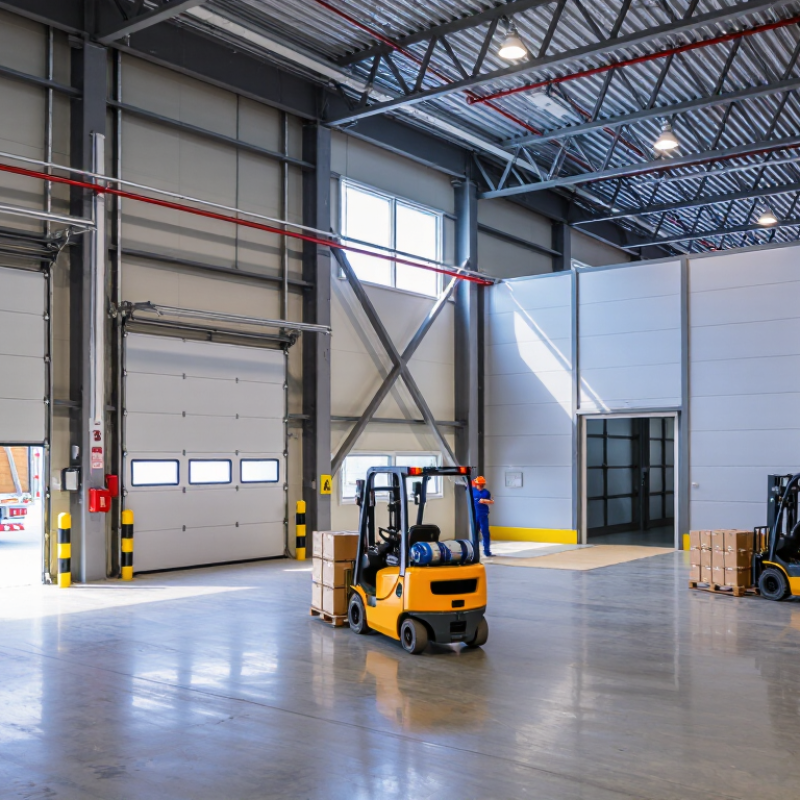
Industrial door manufacturing covers more than door panels and frames. It includes engineering, controls, installation, testing, and long-term maintenance. Global buyers should match each product to traffic volume, climate, building structure, and safety requirements. A busy warehouse may need a rapid-cycle door with impact-resistant panels. A refrigerated room needs insulated doors, tight seals, and reliable heaters around the frame. Clean production areas often require smooth, washable surfaces.
Common product categories include sectional overhead doors, rolling shutters, high-speed fabric doors, cold-storage doors, fire-rated doors, and flexible traffic doors. Dock equipment forms another important group, including dock levelers, shelters, bumpers, and vehicle restraints. Materials range from galvanized steel and aluminum to stainless steel. Buyers should review thermal performance, wind resistance, acoustic control, cycle ratings, and corrosion protection. Safety systems may include photo sensors, light curtains, emergency releases, and manual overrides.
Experienced manufacturers usually provide opening surveys, technical drawings, installation guidance, spare parts, and commissioning records. These documents reveal practical competence. A strong-looking door can still fail when the floor is uneven, drainage is poor, or traffic patterns were misunderstood. This happens more often than catalogs suggest. No specification is perfect. Faster opening may reduce insulation performance, while stronger materials may increase weight and cost. Buyers should inspect samples, verify local compliance documents, and confirm maintenance access before placing large orders. Small details matter.
Industrial Door Product Categories and Typical Applications
Industrial doors are selected according to traffic frequency, environmental control, security requirements, and opening size. The chart shows the number of widely recognized application settings associated with each major product category.
Application examples include factories, warehouses, logistics terminals, loading bays, cold-storage facilities, cleanrooms, parking areas, and aircraft or vehicle maintenance buildings. The figures represent application coverage counts, not market share or sales data.
Leading Manufacturers by Region, Market Focus, and Door Type
Top Industrial Door Manufacturers for Global Buyers
Leading manufacturers differ by region, market focus, and door type.
European producers often emphasize thermal performance, safety testing, and architectural finish.
North American suppliers commonly serve warehouses, factories, and loading docks with sectional and rolling doors.
Asia-Pacific manufacturers frequently offer broad production capacity and competitive customization.
Middle Eastern and African suppliers may focus on heat resistance, dust control, and dependable service networks.
Market needs should guide the shortlist.
Cold-storage facilities require insulated doors with tight seals and stable operating cycles.
Distribution centers usually prioritize high-speed doors, impact resistance, and easy maintenance.
Heavy manufacturing sites may need reinforced rolling doors or large sectional systems.
Fire-rated doors require verified test documentation, not just attractive specifications.
In my sourcing experience, buyers often compare prices too early. That can hide installation costs and replacement delays.
Tips:
Request regional references, service response times, spare-parts availability, and recent test reports. Check whether the door type matches traffic frequency, opening size, climate, and security needs. Ask for maintenance intervals in writing. I once underestimated cleaning requirements around a high-speed door; dust buildup caused avoidable sensor faults. That mistake changed my evaluation checklist. Also, certification language can be confusing across markets. A qualified local engineer should confirm compliance before purchase.
Quality Standards, Customization, and International Compliance
Top Industrial Door Manufacturers for Global Buyers
Quality begins with evidence, not polished brochures. Experienced buyers should request factory inspection records, material certificates, load tests, and service histories. A dependable manufacturer can explain how each door performs under repeated cycles, strong wind, dust, or cold storage conditions. ISO 9001 certification supports consistent processes, but it does not replace product testing. That distinction matters.
Customization should solve an operating problem. Door dimensions, opening speed, insulation, corrosion protection, control voltage, and safety sensors require careful matching. A loading dock may need reinforced panels and impact-resistant guides. A food facility may require smooth surfaces and easy cleaning. Manufacturers should provide drawings before production. Small measurement errors can create expensive installation delays. This happens more often than buyers expect.
International compliance requires more than adding a familiar mark to a quotation. Buyers should confirm applicable regional standards, electrical requirements, fire classifications, and machine-safety rules before ordering. Depending on the destination, documentation may include declarations of conformity, test reports, installation manuals, and maintenance instructions in the local language. Customs codes and packaging details also affect delivery. Ask who holds responsibility for final certification and site approval. Some suppliers answer vaguely, which is a warning sign. Even strong manufacturers can overlook local conditions, so independent inspections and a documented acceptance checklist remain worthwhile.