| 1 |
Verify the Opening and Headroom |
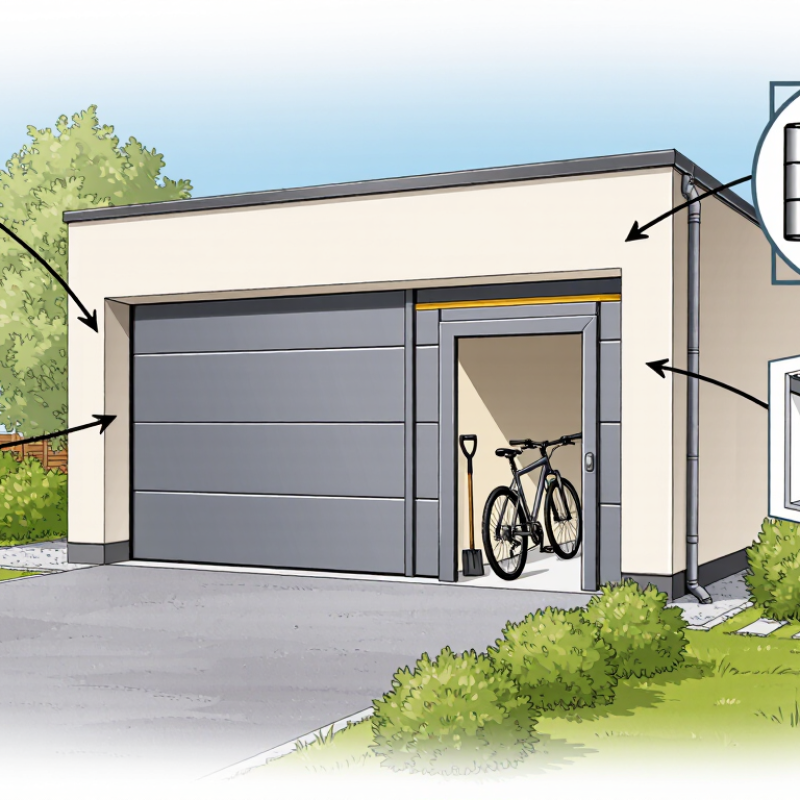
Measure the rough opening width and height, side room, backroom, and headroom. A walk-through door may require additional framing and clearance compared with a standard overhead door.
|
The door must close securely without binding. The surrounding frame should be properly supported so the pedestrian door does not weaken the main garage-door structure.
|
Extra framing, structural adjustments, or electrical relocation can increase labor costs. Exact pricing depends on the opening condition and local labor rates.
|
Check for frame movement, loose fasteners, and uneven gaps at least annually, especially after seasonal temperature changes.
|
| 2 |
Check Local Building and Fire Requirements |
Confirm local rules for door dimensions, exterior egress, threshold height, weather sealing, and permits. Requirements vary by jurisdiction and by whether the garage is attached to the home.
|
A walk-through door used as an exit should open easily from the inside without a key. Hardware and clearances should comply with applicable local safety requirements.
|
Permit fees, inspections, upgraded hardware, or required alterations may add to the project total.
|
Keep documentation of inspections and permits. Recheck the door after renovations or changes to the garage floor level.
|
| 3 |
Choose a Compatible Door Construction |
Compare steel, aluminum, wood, and composite construction. Confirm the panel, hinges, frame, and threshold are designed to work together as one system.
|
A rigid, well-supported frame helps reduce sagging and misalignment. Avoid modifying structural panels on site unless the manufacturer’s installation instructions allow it.
|
Insulated multi-layer doors generally cost more initially but can improve durability and reduce heat transfer through the garage door.
|
Steel may need touch-up treatment where the finish is damaged. Wood commonly requires periodic sealing or repainting to protect it from moisture.
|
| 4 |
Evaluate Insulation and Weather Sealing |
Review the insulation type, panel construction, perimeter seals, bottom seal, and threshold design. Confirm that the walk-through door has continuous weatherstripping.
|
The threshold should limit drafts and water entry without creating a tripping hazard. The door should remain easy to open and close when seals are compressed.
|
Better insulation and sealing raise the purchase price but may improve comfort in adjacent rooms and reduce air leakage.
|
Inspect seals for cracking, flattening, or gaps. Replace worn weatherstripping when it no longer contacts the frame evenly.
|
| 5 |
Confirm Opener and Interlock Compatibility |
Ask how the walk-through door is detected by the opener system. The main garage door should not operate if the pedestrian door is open or unsecured.
|
Use a suitable interlock or monitored safety system. Test automatic reverse and photoelectric safety sensors according to the opener instructions.
|
An interlock, wiring, sensor adjustment, or opener replacement may create additional installation expenses.
|
Test the interlock, auto-reverse function, and photoelectric sensors regularly. Keep sensor lenses clean and correctly aligned.
|
| 6 |
Inspect Hardware, Hinges, and Locking Points |
Confirm that hinges, latch components, closer hardware, and fasteners are rated for the door’s weight and intended frequency of use.
|
The walk-through door should latch fully, remain closed against wind, and allow quick release from the occupied side. Avoid makeshift locks or modifications that can prevent emergency exit.
|
Heavy-duty hardware and a closer may cost more but can reduce premature wear when the door is used frequently.
|
Lubricate hinges and moving metal parts with a suitable product when recommended. Tighten loose fasteners and replace worn latches promptly.
|
| 7 |
Compare Long-Term Maintenance and Service Support |
Obtain written information about installation scope, adjustment procedures, replacement parts, warranty coverage, and service availability. Ask which components are proprietary or difficult to source.
|
Have spring, cable, track, and opener repairs performed by a qualified garage-door technician. High-tension springs and lifting cables can cause serious injury if handled incorrectly.
|
Budget for periodic inspections, seal replacement, hardware adjustment, and possible opener or spring repairs. Labor and part prices vary by location and door size.
|
Visually inspect the door, tracks, cables, rollers, seals, and walk-through-door latch at least monthly. Arrange professional service when components show damage, unusual noise, or imbalance.
|