2026 Top Craft Garage Doors for Global Buyers

In 2026, craft garage doors are moving beyond simple vehicle access. Global buyers now expect stronger materials, quieter operation, and designs that fit local architecture. A timber-look door may suit a coastal villa, while insulated steel may better serve a cold warehouse. The right choice depends on climate, opening size, security needs, and maintenance capacity.

Market evidence supports this shift. Zonda’s 2024 Cost vs. Value Report recorded a 194% cost recoup for upscale garage door replacement in the United States. That figure reflects strong homeowner demand for visible exterior upgrades. The report does not guarantee equal returns in every country. Local labor, shipping, and installation standards can change the result. Grand View Research also identifies energy efficiency, automation, and residential construction as major garage door market drivers. These trends matter to distributors, builders, and property developers.

Details matter.

A reliable craft garage doors supplier should explain panel construction, R-value, corrosion protection, hardware cycles, and warranty limits. The International Door Association and DASMA provide technical guidance that helps buyers compare safety features and installation practices. Buyers should request tested wind-load ratings where regional weather requires them. They should also confirm motor compatibility, replacement-part availability, and after-sales support before ordering.

Customization can create value, but it can also create confusion. A premium finish does not repair poor alignment. A smart opener cannot compensate for weak springs or careless installation. This guide examines leading 2026 options through performance, design, durability, compliance, and total ownership cost. Some conclusions remain practical rather than perfect. Product claims still deserve independent verification.

2026 Top Craft Garage Doors for Global Buyers

Understanding Craft Garage Door Styles and Their Global Appeal

2026 Top Craft Garage Doors for Global Buyers

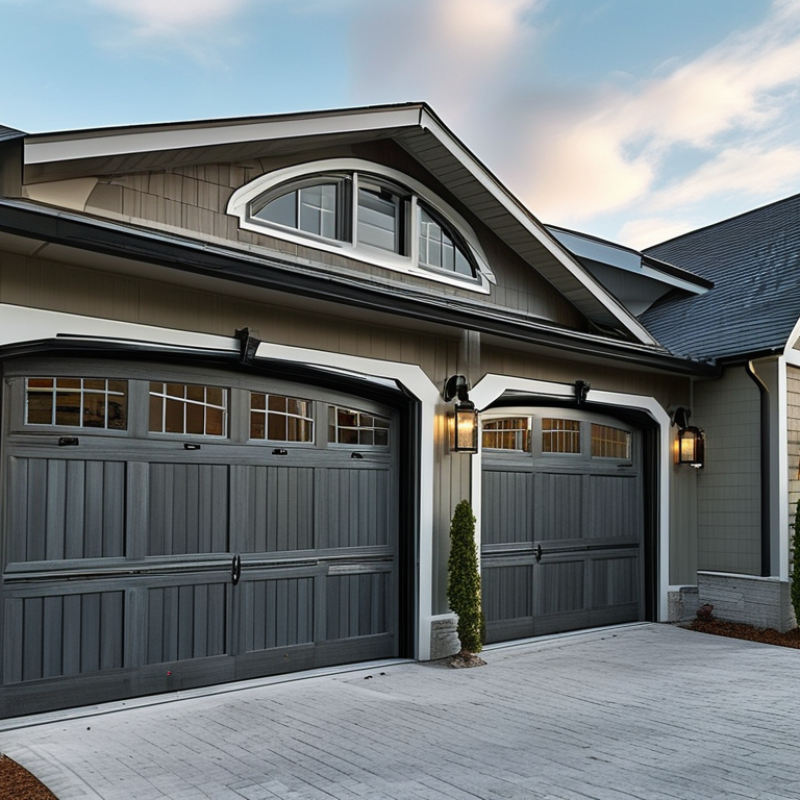
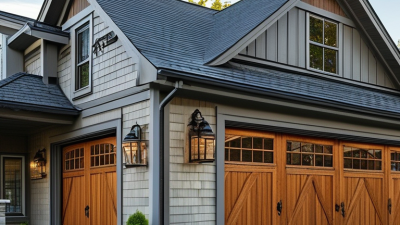
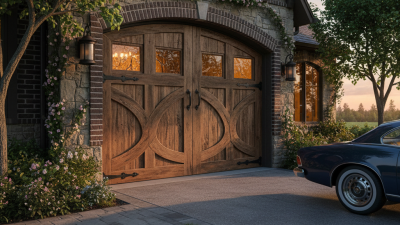
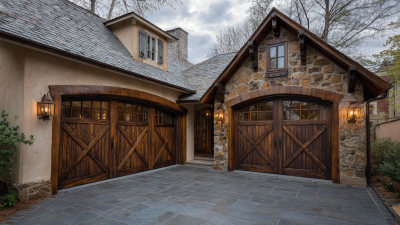
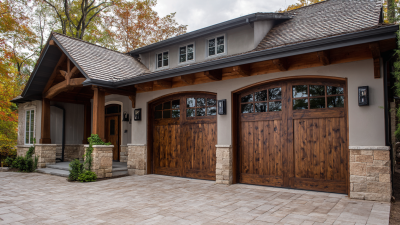
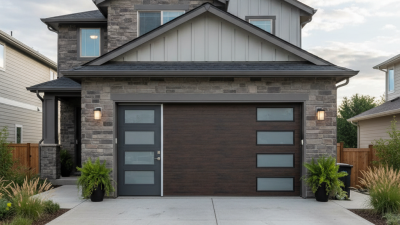
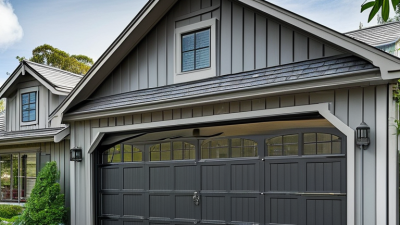
Craft garage doors are gaining attention because style now carries practical responsibilities. Carriage-house designs add warmth with stamped panels, narrow windows, and durable wood-look finishes. Flush doors suit modern homes with clean lines and limited visual noise. Glass-panel doors create bright garages, but they may reduce privacy in dense neighborhoods. These choices reflect local architecture, climate, and daily use.

Grand View Research estimated the global garage door market at about USD 3.1 billion in 2023, with steady growth expected through 2030. Its analysis links demand to residential construction, replacement projects, and automated access. The International Energy Agency reports that buildings consume roughly 30% of global final energy. Therefore, buyers should examine insulation, weather seals, and thermal bridging, not only decorative details. In cold regions, insulated steel or composite panels can improve comfort. Coastal buyers need corrosion-resistant hardware and careful drainage.

Details matter.

Installers often find that a beautiful door performs poorly when the opening is uneven. A professional site measurement should check headroom, side clearance, wind exposure, and operating cycles. Regional standards also differ, so test documents must match the destination market. I would not treat one insulation rating as universally comparable; testing methods vary. Even handcrafted finishes can show small color differences, especially across large panels. That imperfection deserves discussion before production, not after delivery.

Understanding Craft Garage Door Styles and Their Global Appeal

Single-car garage doors are commonly specified within the regional width ranges shown above. These dimensions help global buyers compare handcrafted styles, including carriage-house, shaker, flush-panel, and windowed designs, while keeping the door proportionate to local residential architecture. Actual openings vary by project, so final sizing should follow site measurements and local building requirements.

The chart uses typical published nominal residential garage-door width conventions in meters; regional construction practices and custom openings may differ.

Comparing Materials, Construction Quality, and Design Flexibility

2026 Top Craft Garage Doors for Global Buyers

Material choice shapes durability, maintenance, and visual character. Solid timber offers natural grain, but it needs regular sealing in humid climates. Steel provides consistent strength and resists warping, especially with galvanized layers. Aluminum suits coastal homes because it is lightweight and naturally corrosion resistant. Composite panels can imitate timber while reducing seasonal movement. The compromise is real.

Construction quality deserves closer inspection.

Look for reinforced stiles, balanced hinges, sealed joints, and properly fitted weatherstripping. A heavier door is not automatically stronger. Poor hardware can shorten service life. Wind-rated assemblies should match local building requirements, not only appearance. DASMA technical guidance stresses tested components and correct installation for dependable door performance.

Design flexibility now extends beyond panel profiles.

Buyers can specify narrow glazing, warm wood tones, flush surfaces, or mixed materials. Insulation also matters in attached garages. The 2024 U.S. Cost vs. Value Report recorded about 194% cost recouped for upscale garage-door replacement, showing strong resale appeal. That figure reflects market averages, not a promise for every property. NAHB’s 2024 buyer-preference research also keeps garage space among highly valued home features.

I would still question oversized glass in hot regions. It looks refined, but solar heat and privacy may become expensive after installation.

Evaluating Insulation, Security, Durability, and Smart Features

2026 Top Craft Garage Doors for Global Buyers

Insulation should be judged by tested performance, not a large R-value label. The International Energy Agency reports that buildings use about 30% of global final energy. An insulated garage door can reduce heat transfer beside conditioned rooms. Look for continuous seals, thermal breaks, and correctly fitted panels. Steel skins resist impacts, while dense cores limit temperature swings. However, insulation alone cannot fix an unsealed frame. That detail is often overlooked.

Security depends on structure and daily control. Check reinforced hinges, protected lifting hardware, and an automatic reversal system. EN 1627 resistance classes can help buyers compare tested security performance. Smart features add value when they provide encrypted access, activity alerts, and temporary permissions. The NIST Cybersecurity Framework recommends regular updates, strong authentication, and device monitoring. Convenience is not security. A connected opener with outdated software becomes a weak point. Durability also needs honest evaluation. Salt air, dust, ultraviolet exposure, and repeated cycling can shorten service life. ASTM and DASMA testing references are useful, but real installation quality still matters.

Tips: Measure the opening twice. Ask for thermal test results. Confirm local electrical compatibility. Choose weather-resistant coatings for coastal regions. Review update support before buying. I would also inspect the bottom seal after one rainy season. Small gaps often reveal more than brochures.

Matching Door Specifications to Regional Climate and Building Standards

A craft garage door should be specified for its climate, not chosen by appearance alone. In coastal regions, request corrosion-resistant hardware, sealed joints, and tested wind-load performance. EN 1991-1-4 supports location-based wind calculations, including exposure and building height. A door that works inland may fail near a storm-prone shoreline.

Cold climates need insulated panels, flexible seals, and drainage that prevents frozen tracks. The U.S. Department of Energy identifies air leakage as a major source of building energy loss, so installation quality matters as much as panel insulation.

In hot regions, reflective finishes and ventilation can reduce heat buildup inside the garage. The 2024 UNEP Global Status Report states that buildings consume about 32% of global energy. Small envelope improvements deserve attention.

Standards still vary by market. North American projects may reference regional building codes and tested wind resistance, while European projects commonly require conformity with EN 13241 and applicable structural calculations. Australia and coastal Asian markets may demand stronger cyclone or typhoon provisions. Confirm local fire, egress, electrical, and accessibility rules before fabrication. This step is often skipped. That is a costly mistake. Field experience also shows that decorative timber requires more maintenance in humid climates, despite its excellent visual character. Even expert specifications need review after measuring the opening, surrounding walls, drainage, and real site exposure.

Selecting Reliable Manufacturers, Certifications, and Buying Options

2026 buyers should audit a garage-door manufacturer before comparing prices. In supplier assessments, request factory photographs, material certificates, load-test records, and recent inspection reports. Steel thickness, panel density, spring-cycle ratings, and wind resistance matter more than polished catalogs. A 2024 Grand View Research market analysis identifies residential replacement and renovation as major demand drivers. That demand can attract weak suppliers.

Certification must match the destination market. For powered doors, ask whether products meet UL 325 requirements in the United States or EN 13241 requirements in Europe. CE marking indicates conformity with applicable European rules; it is not a universal quality award. The ISO Survey 2023 recorded more than 1.2 million ISO 9001 certificates worldwide. Still, certification alone proves little. Check the certificate scope, issuing body, and expiration date. A useful manufacturer should explain testing in plain language.

Buying directly from a factory may reduce cost, but distributors can simplify local compliance, spare parts, and warranty service. Ask for one sample door, packed like a real shipment. Inspect its hinges, seals, rollers, and packaging damage. Request a written quotation with Incoterms, minimum order quantity, lead time, replacement parts, and payment stages. I would avoid paying the full amount upfront. That preference is practical, not perfect. Small factories may offer stronger customization, while larger plants often provide steadier documentation. Recheck everything.

2026 Top Craft Garage Doors for Global Buyers - Selecting Reliable Manufacturers, Certifications, and Buying Options
Evaluation Dimension Reliable Product Benchmark Documents or Data to Request Global Buying Considerations
Door Construction Insulated sectional doors commonly use double-skin steel panels with a rigid foam core. Non-insulated single-skin steel or aluminum doors are generally suited to garages where thermal performance is not a priority. Panel cross-section drawing, material specification, panel thickness, insulation-core type, corrosion-protection details, and declared thermal-performance data. Choose insulated construction for attached garages, workshops, and climates with significant temperature differences. Confirm that panel dimensions, end stiles, hinges, tracks, and seals are compatible as one complete system.
Thermal Performance Request a declared U-value or R-value for the complete door assembly rather than relying only on the insulation-core rating. Lower U-values indicate lower heat transfer; higher R-values indicate greater resistance to heat flow. Test method, calculation method, declared U-value or R-value, air-leakage data, and the conditions under which the value was measured. Do not compare U-values and R-values directly without conversion. Weather seals, glazing, joints, and installation quality can materially affect actual performance.
Wind-Load Capability The door should have a documented design wind pressure or wind-load rating suitable for the installation location. The required rating depends on regional wind speed, building height, exposure, and opening size. Structural calculations, pressure rating, test report, reinforcement layout, anchoring requirements, and maximum approved door size. Coastal, hurricane-, cyclone-, and typhoon-prone regions require location-specific engineering. A generic “heavy-duty” description is not a substitute for a documented pressure rating.
Safety Standards For the European market, EN 13241 is the principal product standard for industrial, commercial, and garage doors. EN 12453 addresses safety in use, including protection against risks associated with powered doors. Declaration of Performance where applicable, test reports, risk assessment, safety-device specifications, and installation and maintenance instructions. Verify the requirements of the destination country before ordering. Product compliance, electrical compliance, and installation compliance may involve separate obligations.
North American Requirements UL 325 is a recognized safety standard for door, gate, louver, and window operators and systems in North America. Local building codes may also require entrapment protection and specific installation practices. Operator listing or certification details, entrapment-protection method, photo-eye information, manual release arrangement, and wiring instructions. Confirm voltage, frequency, control architecture, radio frequency requirements, and local authority requirements before combining an imported door with a locally sourced operator.
Electrical Compatibility Common commercial electrical supplies include 120 V or 230 V single-phase systems, while some larger operators use three-phase power. Actual availability varies by country and building. Rated voltage, frequency, phase, motor power, standby consumption, duty cycle, wiring diagram, and protection requirements. Never assume that a motor supplied for one market can be connected directly in another market. Confirm plug, control-panel, grounding, circuit-protection, and frequency compatibility.
Certification Management ISO 9001 certifies a quality-management system; it does not by itself certify a particular garage-door model. Product certificates and test reports must identify the relevant model, configuration, and test scope. Current ISO 9001 certificate, certification-body details, certificate scope, model-specific test reports, and certificate validity dates. Check the issuing body and certificate number independently. A factory-management certificate should not be presented as proof of product safety or structural performance.
Material Durability Galvanized steel, coated steel, aluminum, and stainless-steel components provide different balances of strength, weight, corrosion resistance, and cost. Base-metal grade, coating or anodizing specification, salt-spray test method where offered, fastener material, and maintenance requirements. For humid or marine environments, specify corrosion-resistant fasteners, suitable coatings, sealed hardware, and a documented cleaning and inspection schedule.
Hardware and Balance System Torsion springs, lift cables, drums, rollers, hinges, tracks, and brackets must be selected as a matched system. Spring-cycle ratings should be stated as expected operating cycles. Spring-cycle rating, cable diameter, roller material, track gauge, replacement-part list, adjustment procedure, and safety instructions. Request spare cables, rollers, hinges, seals, and springs for long-term projects. Spring adjustment and replacement should be performed by trained personnel because stored energy creates serious injury risks.
Opening Size and Customization Sectional and rolling doors are normally manufactured to ordered dimensions. Headroom, side room, backroom, floor level, lintel condition, and ceiling obstructions affect the configuration. Approved shop drawing, opening width and height, headroom requirement, side-room requirement, backroom requirement, track configuration, and glazing layout. Submit measured site drawings before production. A standard door size may not fit the structural opening or provide sufficient space for the selected track and operator.
Operator and Controls A complete powered-door package should define the operator type, duty rating, control method, safety sensors, manual release, and emergency operation. Operator manual, duty-cycle rating, control-panel data, safety-sensor wiring, remote-control frequency, emergency-release details, and spare-parts list. Separate the door-panel specification from the operator specification. Confirm interoperability before purchasing a door from one source and automation equipment from another.
Quality-Control Process A dependable production process should include incoming-material inspection, dimensional checks, coating or finish checks, assembly inspection, functional testing, and final packing inspection. Inspection and test plan, batch traceability, nonconformity process, final inspection checklist, pre-shipment photographs, and serial-number records. For container or project orders, use an agreed acceptance standard and sampling plan. Independent pre-shipment inspection is useful when order value or project risk is high.
Packaging and Shipping Doors should be protected against impact, moisture, abrasion, and deformation during handling and ocean transport. Wooden packaging may be subject to international treatment requirements. Packing list, package dimensions and weights, loading photographs, moisture-protection method, spare-parts packing method, and wood-packaging compliance information. Compare EXW, FCA, FOB, CIF, and DAP quotations carefully because they allocate freight, insurance, customs, unloading, and delivery responsibilities differently.
Buying Options Typical purchasing routes include direct factory order, authorized distributor, project integrator, online B2B marketplace, and local installation contractor. Formal quotation, Incoterm, minimum order quantity, lead time, payment schedule, warranty terms, technical support scope, and dispute-resolution terms. Direct purchasing may reduce intermediary cost but requires stronger technical control. Local distributors and installers may provide faster service, commissioning, and spare-parts support.
Warranty and After-Sales Service A useful warranty defines coverage separately for panels, finish, hardware, springs, operator, electronics, and workmanship, together with exclusions and service obligations. Warranty period, response time, replacement-part availability, technical-support channel, labor coverage, return procedure, and maintenance requirements. Confirm whether the warranty remains valid when installation is performed by a third party. For remote markets, prioritize suppliers that can provide manuals, diagnostic support, and commonly needed spare parts.
Recommended Buyer Verification A supplier should be able to provide consistent technical information, traceable documentation, clear commercial terms, and references for comparable installations. Factory audit report, sample inspection, verified references, model-specific certifications, production schedule, and signed technical specification. Use a staged process: technical prequalification, sample or prototype approval, documented purchase order, pre-shipment inspection, and installation commissioning.
Buyer note: Certification marks, test reports, wind-load ratings, electrical approvals, and building-code obligations should always be verified for the exact door model, operator configuration, destination country, and installation conditions.